How Vehicle Recycling Helps Reduce Waste in Hawke’s Bay
Most of us don’t think much about what happens to a car once it reaches the end of its life.
When a vehicle becomes too costly to repair, experiences repeated failures, or ceases to function, it is often left on private property while the owner considers next steps. But eventually, every vehicle reaches a point where keeping it no longer makes sense. The good news is that an old vehicle doesn’t have to become waste.
Unwanted car recycling in Hawke’s Bay provides many vehicles with a renewed purpose. Rather than being abandoned or sent to a landfill, valuable materials and reusable parts are recovered, reducing environmental impact and promoting a more sustainable method of vehicle disposal.
As more Hawke’s Bay residents look for responsible ways to deal with old vehicles, recycling is becoming an increasingly important part of the solution.
What Happens to a Vehicle at the End of Its Life?
Not every vehicle reaches the end of its life in the same way. Some cars are written off after accidents. Others develop major mechanical problems that cost more to repair than the vehicle is worth. In some cases, age simply catches up with a vehicle after years of reliable service.
At this stage, owners often face a challenging decision about the vehicle’s future.
- Should they continue spending money on repairs?
- Should they leave the vehicle parked until they decide what to do?
- Or is it time to consider recycling?
For many vehicles, recycling represents the most practical option, as it enables the recovery of valuable materials. The recycling industry regards old vehicles as sources of reusable resources rather than as waste.
Why Old Vehicles Can Become an Environmental Problem
An unused vehicle may not seem harmful at first glance. After all, it’s just sitting there. However, over time, neglected vehicles can pose several environmental concerns. Engine oil, coolant, brake fluid, and other automotive liquids can seep into the ground when a vehicle deteriorates over time. Batteries contain materials that must be handled and disposed of properly. Tyres and plastics can also become garbage if not handled properly.
This is one reason why leaving an unwanted vehicle sitting indefinitely isn’t always the best solution. When vehicles are properly recycled, these materials can be managed safely rather than becoming environmental hazards. For communities across Hawke’s Bay, responsible disposal plays an important role in reducing waste and protecting local environments.
How Vehicle Recycling Actually Works
Many people are surprised to learn how much of a vehicle can be recovered during the recycling process.
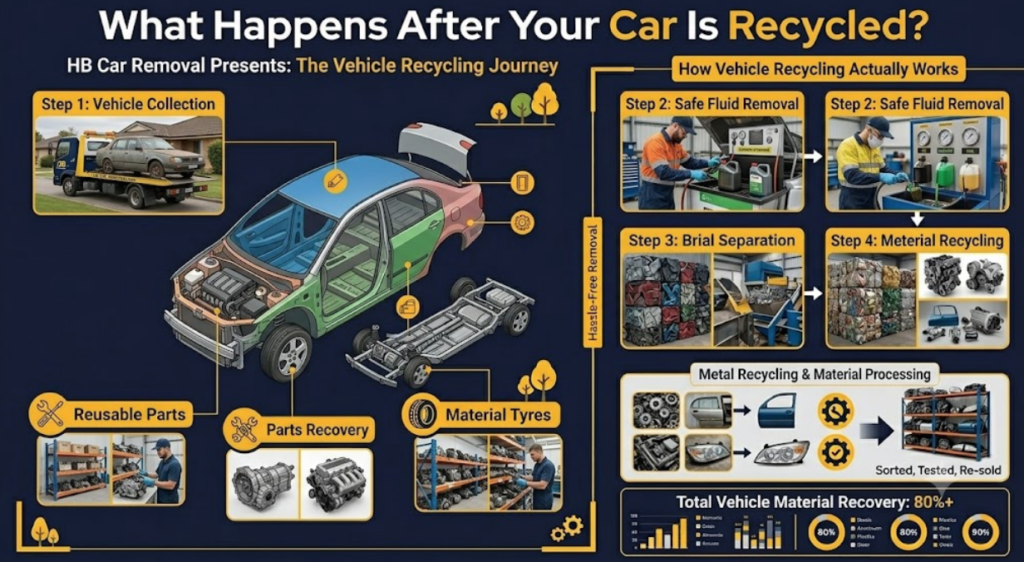
When a vehicle reaches a recycling centre, it is not only crushed and dumped. The procedure typically starts with the removal of fluids and dangerous chemicals. This helps to avoid contamination and ensures that potentially hazardous chemicals are handled properly.
Next, reusable components are examined. Engines, gearboxes, alternators, mirrors, lights, wheels, and body panels may still be valuable. These parts are frequently reused in other vehicles, extending their useful life and minimising the need for new replacements.
Once reusable parts are removed, the remaining metal is processed and recycled. Steel, aluminium, and other materials are separated and sent for further processing to create new products. This significantly reduces waste that would otherwise end up in landfill.
How Much of a Vehicle Can Be Recycled?
You might be surprised by how much of an old vehicle can actually be recycled. In many cases, around 75–85% of a vehicle’s materials by weight can be recovered or recycled, depending on its age and condition. Materials like steel, aluminium, glass, rubber, plastics, and many mechanical parts can all be given a new purpose instead of ending up as waste.
Many people assume that only the metal parts are worth keeping. In reality, modern vehicle recycling recovers much more than that. Usable components can often be refurbished or reused, while materials that can’t be reused directly are processed into raw materials for manufacturing new products.
This means that a vehicle many people think of as “junk” may still have plenty of value. By recovering and reusing these materials, vehicle recycling helps reduce landfill waste, conserves natural resources, and supports a cleaner, more sustainable future for Hawke’s Bay.
The Benefits of Car Recycling for Hawke’s Bay
Vehicle recycling isn’t only beneficial for vehicle owners. It also provides broader environmental benefits for the region.
By recovering materials from old vehicles, recycling helps reduce the amount of waste entering landfill facilities. It also reduces the need to extract and process new raw materials, which often requires significant energy and resources.
For a region known for its natural beauty, agricultural activity, and outdoor lifestyle, reducing unnecessary waste is an important goal.
As more residents choose car recycling Hawke’s Bay services, the positive impact extends beyond individual properties and contributes to a cleaner community overall. Small actions taken by individual vehicle owners can collectively make a meaningful difference.

Why More Owners Are Choosing Recycling Instead of Storage
Take a drive through many residential or rural properties in Hawke’s Bay, and you’ll often spot vehicles that haven’t moved in years. Some are parked with the intention of being repaired one day, while others have simply been forgotten over time. The problem is that leaving an old vehicle sitting doesn’t preserve its condition. Batteries fail, tyres deteriorate, rust spreads, and its value continues to decline. Eventually, many owners realise that holding onto an unwanted vehicle serves little purpose and that recycling or selling it is a far more practical solution.
Instead, options such as scrap car removal at Hawke’s Bay offer a practical way to free up valuable space while ensuring the vehicle is handled responsibly. For many households, removing an unwanted vehicle can instantly improve the property’s appearance and functionality.
Choosing a Responsible Vehicle Recycling Service
Recycling services may differ in their operational practices. When selecting a provider for vehicle recycling, it is advisable to choose one that adheres to responsible environmental standards and possesses experience with end-of-life vehicles. A reputable service should:
- Remove vehicles safely
- Handle fluids responsibly
- Recycle materials where possible
- Recover reusable parts
- Provide clear information about the process.
Many car wreckers in Hawke’s Bay play an important role in this process by helping recover valuable components while reducing unnecessary waste. Likewise, professional vehicle removal services in Hawke’s Bay make it easier for owners to remove unwanted vehicles without the stress of arranging transport themselves.
The goal should always be to ensure the vehicle is processed responsibly rather than simply discarded.
Why Vehicle Recycling Matters for the Environment
When most people think about recycling, they think about household items such as paper, plastic, and glass. Vehicles are often overlooked. Yet every old car contains materials that can be reused, recycled, or repurposed.
Selecting unwanted scrap car recycling extends beyond mere disposal. It involves eliminating waste, recovering valuable resources, and supporting the region’s long-term sustainability. For Hawke’s Bay car owners, recycling represents a practical solution that benefits both individuals and the broader community.
Conclusion
Although an old car may appear to be nothing more than junk, it typically includes valuable parts and components. Car recycling in Hawkes Bay allows discarded cars to be handled ethically, decreasing landfill trash, recovering usable resources, and minimising environmental impact.
Whether a vehicle has been sitting in a driveway, garage, farmyard, or backyard, recycling offers a more sustainable alternative to leaving it unused or sending it to a landfill.
As awareness continues to grow, more Hawke’s Bay residents are recognising that responsible vehicle disposal isn’t just about removing a car; it’s about reducing waste and making better use of the resources we already have.
Frequently Asked Questions
What is vehicle recycling?
It is the process of dismantling end-of-life vehicles to recover reusable parts and recyclable materials rather than discarding them as waste.
How much of a vehicle can be recycled?
A large portion of most vehicles can be recycled, including metals, glass, plastics, rubber, and certain mechanical components.
Are old vehicles bad for the environment?
They can be if left unmanaged for long periods. Leaking fluids, deteriorating batteries, and other materials may create environmental concerns over time.
What happens to parts removed from recycled vehicles?
Usable parts are often inspected, tested, and sold for reuse, helping extend the lifespan of other vehicles.
Can non-running vehicles be recycled?
Yes. Many recycling and removal services accept vehicles that no longer run, including those damaged in accidents and those that have failed mechanically.
Is recycling old cars better than sending a car to a landfill?
In most cases, yes. Recycling allows materials and components to be recovered and reused, reducing waste and minimising environmental impact.